The Culinary Experience
Two cooking classes. Many tables. One way of eating.

Two cooking classes. Many tables. One way of eating.
In this house, food is not separate from anything. Not from the wine. Not from the garden. Not from the people who happen to be around the table that night.
It is woven through the week the way it is woven through our daily life — because the week, for us, is our daily life, with eight more chairs.
A pasta class, in motion
Arnaud filmed a pasta class — the dough, the table, the laughter. A few minutes of how this house actually cooks.
How I learned, and how I teach
I grew up in a Neapolitan family where meals were the architecture of the day. For fifty-four years, our family had a Nanny named Lina. She cooked for us my entire childhood. She never measured anything. She tasted constantly. She knew when pasta dough was ready by pressing it with the back of her hand.
I followed her around the kitchen with a Hello Kitty notebook, writing down recipes she had never written down herself. The recipes in that notebook are mostly wrong, because what she actually taught me was something a notebook cannot hold: that cooking is intuition, season, generosity, and the love you have for the people you are cooking for. Made edible.
I have spent the rest of my life cooking the way Lina taught me, in homes I have lived in across two countries. When I started teaching, I did not know how to teach any other way. I still don’t. The two cooking classes during the week are not lessons. They are sessions of cooking together, in my actual kitchen, with the same hands that cook for my family every day.

“Treat yourself to a wonderful experience and tour with Chicca her charming Tuscan village, taste delicious pasta, gelato, and many other local specialties. It’s an unforgettable immersion in Tuscan culture, and we felt like locals!”

“We loved Castagneto Food tour. We sampled several traditional Tuscan recipes paired with great wines from the area. Lots of food! Our guide was great and told us stories about ancient history and local life as we toured in Castagneto. I learned a lot and had fun!”

“I would highly recommend Tuscan Wine & Food Tours! We did Bolgheri Food Tour, this village is stunning! We tasted delicious local food and amazing wines. We learn a lot about history, wine culture and traditional recipes from our fun and knowledgeable guide. Don’t miss it!”
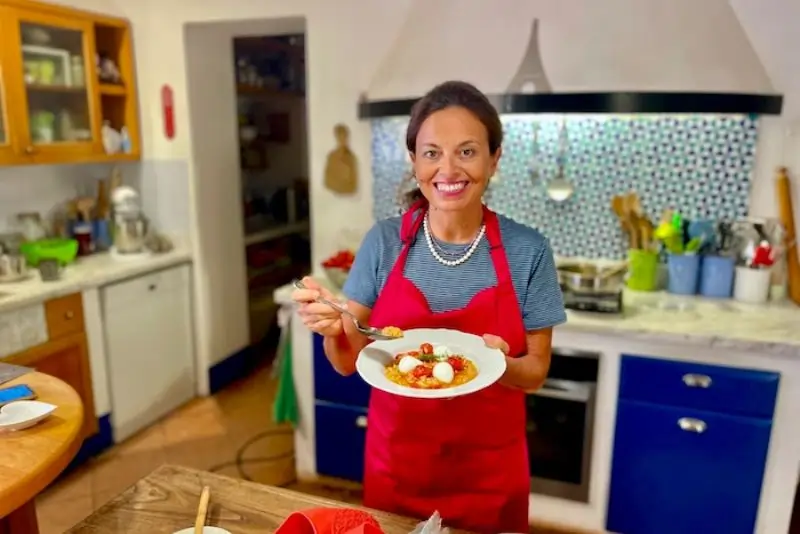
The two cooking classes at La Casa Toscana
Once in the late morning, followed by lunch at our long table. Once in the late afternoon, followed by dinner — and on this night, more often than not, a winemaker joins us and pours his bottles alongside what we have just cooked.
The kitchen is the kitchen I designed when I restored the house — Carrara marble countertops because they stay cool when you are working pasta in August, windows over the olive grove, herbs three steps from the door.
I teach by feel. Pasta first — egg pasta, the way it is made in this house — then the sauce, then the dessert, often something simple with seasonal fruit. I will send you a small set of recipes afterward, written in my own words, so you can cook these dishes at home.
The garden walk before each class
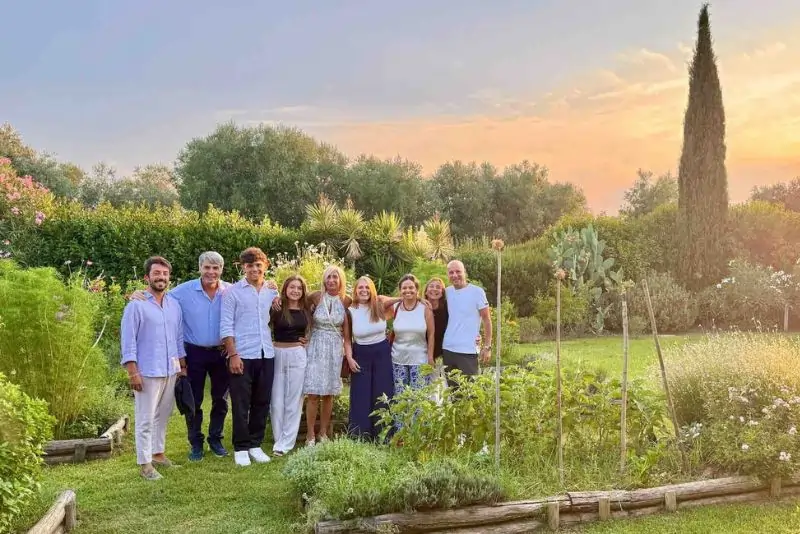
Before either class begins, we walk into the vegetable and herb garden together. We pick what we need. Rosemary, sage, a few tomatoes if it is summer, the soft inner leaves of a lettuce we planted in March. Whatever the season has given us.
The basket comes back to the kitchen with us. What is in it shapes what we cook. There is no fixed menu. The garden decides.
The restaurants we eat at
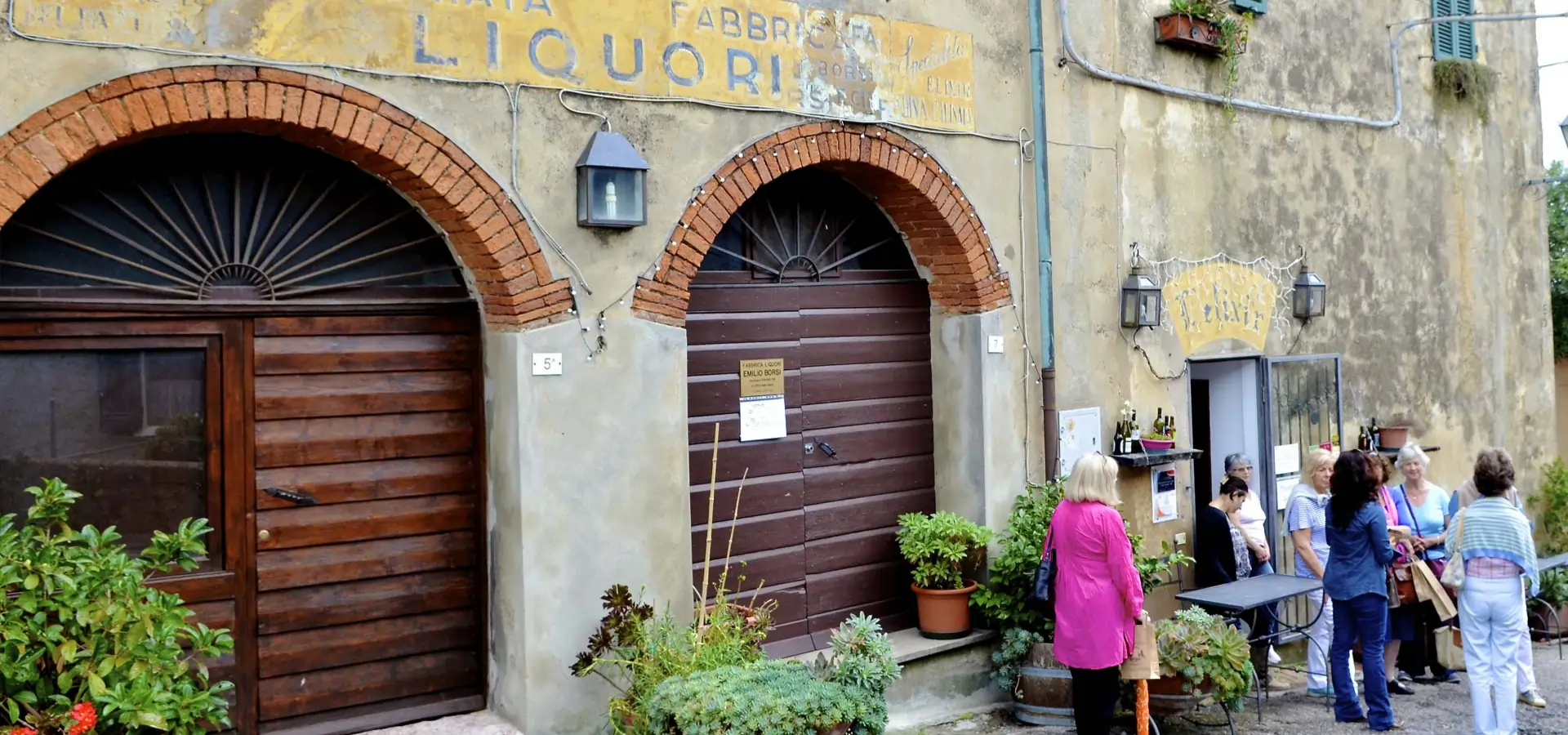
Plus five breakfasts on the hotel terrace. The restaurants are chosen carefully, the same way we choose the wineries.
On Day 2, lunch is at our favorite seafood restaurant on the Mediterranean — the meal where Arnaud and I quietly pay our own bill, because we want to be at this table with you as friends, not as hosts. That same evening, we eat at the wine shop in Bolgheri where the locals go.
On Day 4, lunch is at the cheese farm. The farewell dinner is at the elegant restaurant owned by the Tenuta San Guido family — the family that makes Sassicaia. Each meal is a piece of the same week. None of them is generic.
The producers we know by name
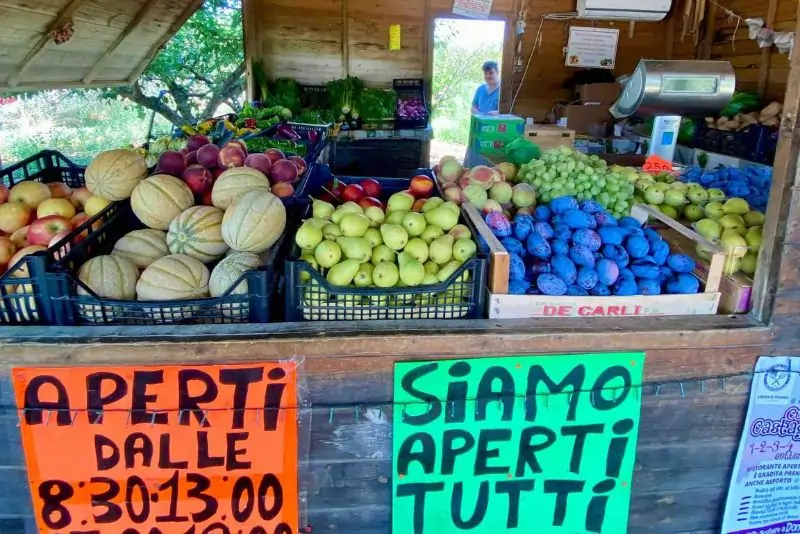
It comes from someone we have known for years. Rita Salvadori at Peperita, who grows chillies the slow way and whose products you will taste during the week. The cheese family in the hills who have been making pecorino their grandfather’s way for decades, and whose children we have watched grow up. The baker in Castagneto who refuses to modernize. The coffee roaster who will explain to you what real Italian espresso is.
We have chosen each one for two reasons: the quality of what they make, and the way they treat the land and the people who work it. Almost all of them are organic. Some are biodynamic. None of them are chosen because they pay us a fee. We pay them, the way you would, because their work is worth what they ask.
What changes in your kitchen at home
You reach for olive oil more readily. You taste the sauce three times. You use less of everything. You remember a herb.
We have had guests send us photographs of pasta they have made years later, in their own kitchens, in their own countries. Some of those guests come back. Some have never been able to eat supermarket pasta the same way again. Both are good outcomes.
You will. I teach beginners every season, and they do beautifully. I teach by feel and by demonstration. There are no surprise tests. Experienced cooks usually find that they un-learn a few things and learn a few new ones — which they tell me afterward is more useful than they expected.
We accommodate most dietary needs with advance notice. Italian cuisine naturally offers excellent vegetarian options, and I work closely with our restaurant partners on other requirements — gluten-free, dairy-free, allergies. Tell me on the call. We will make sure you eat beautifully.
Yes. After the week, I will send you a small set of recipes from what we cooked together, written in my own words, so you can cook these dishes at home. They are not exhaustive — Lina herself never wrote her recipes down, and she taught me by feel — but they will give you the spine of each dish.
Have other questions? See the full FAQ — or write to me directly. The real conversation is the call.
A presto, Chicca