The Bolgheri Region
Tuscany, but the coastal one. The one most travelers miss.

Tuscany, but the coastal one. The one most travelers miss.
This is not Florence. This is not Chianti. This is the Etruscan Coast — six kilometers from the Mediterranean, an hour south of Pisa, on a stretch of land where Carducci wrote, the Etruscans mined iron, and a small wine region quietly changed the country.
It is the Tuscany we chose to live in, and the Tuscany most travelers do not know exists.
The Etruscan Coast, in motion
Arnaud filmed the coast — the villages, the cypresses, the light, the sea. A few minutes of where the week actually lives.
Where exactly we are
We are on the Tyrrhenian coast, between Livorno and Grosseto, facing Corsica across the water. From our farmhouse, you can be in the vineyards in fifteen minutes, on the beach in ten, and in a medieval hilltop village in twenty. That density of landscape — sea, vineyard, hill, village, all within a small radius — is the texture of every day on this tour.
It is also why the food is what it is, and the wine is what it is. The Mediterranean breezes cool the vines on summer evenings and slow the ripening; the salt air is in the leaves before it is in the glass. The seafood is on the lunch menu before it has reached anyone else’s restaurant. The cuisine here pulls from both sea and land in a way that inland Tuscany cannot.
And it is why the crowds are not here. The Etruscan Coast has been, for years, the part of Tuscany the tour buses do not reach. Castagneto Carducci has its own train station and its own quiet. Bolgheri is small enough to walk in an hour. Volterra rewards walking slowly. The villages are not closed to visitors — they are simply not built around them.
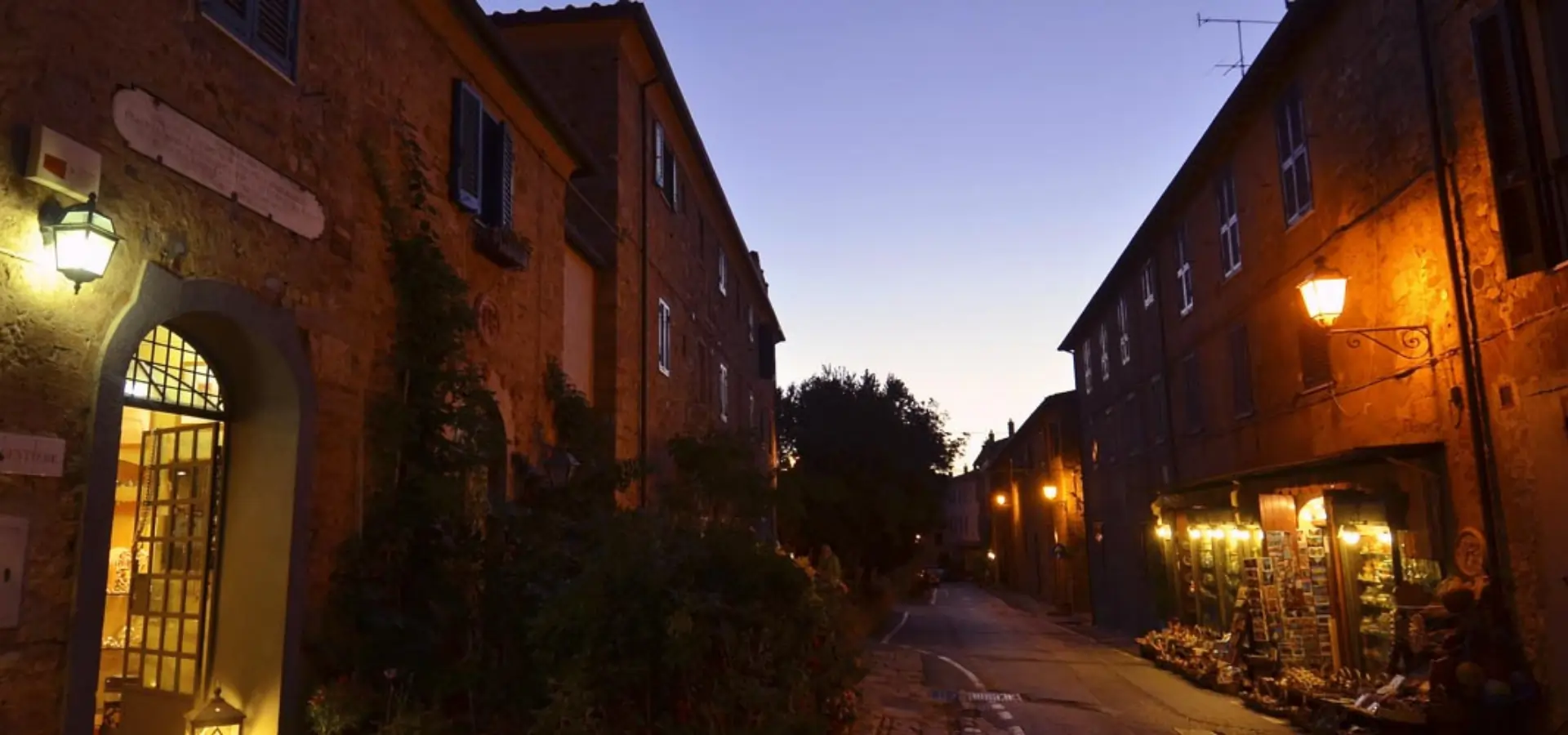
Castagneto Carducci — our home
A hilltop town with sweeping views to the sea, a working centre with shops and trattorias, an artisan baker who refuses to modernize, a coffee roaster who will explain to you what real Italian espresso is. The village has its own train station. Tourism is part of the economy here, but it is not the economy. People still live in Castagneto Carducci because they have always lived in Castagneto Carducci.
You will walk these streets not as a tourist but as someone we have brought with us. By Wednesday, the woman at the gelato shop will recognize you.
Bolgheri — the village at the end of the cypress road
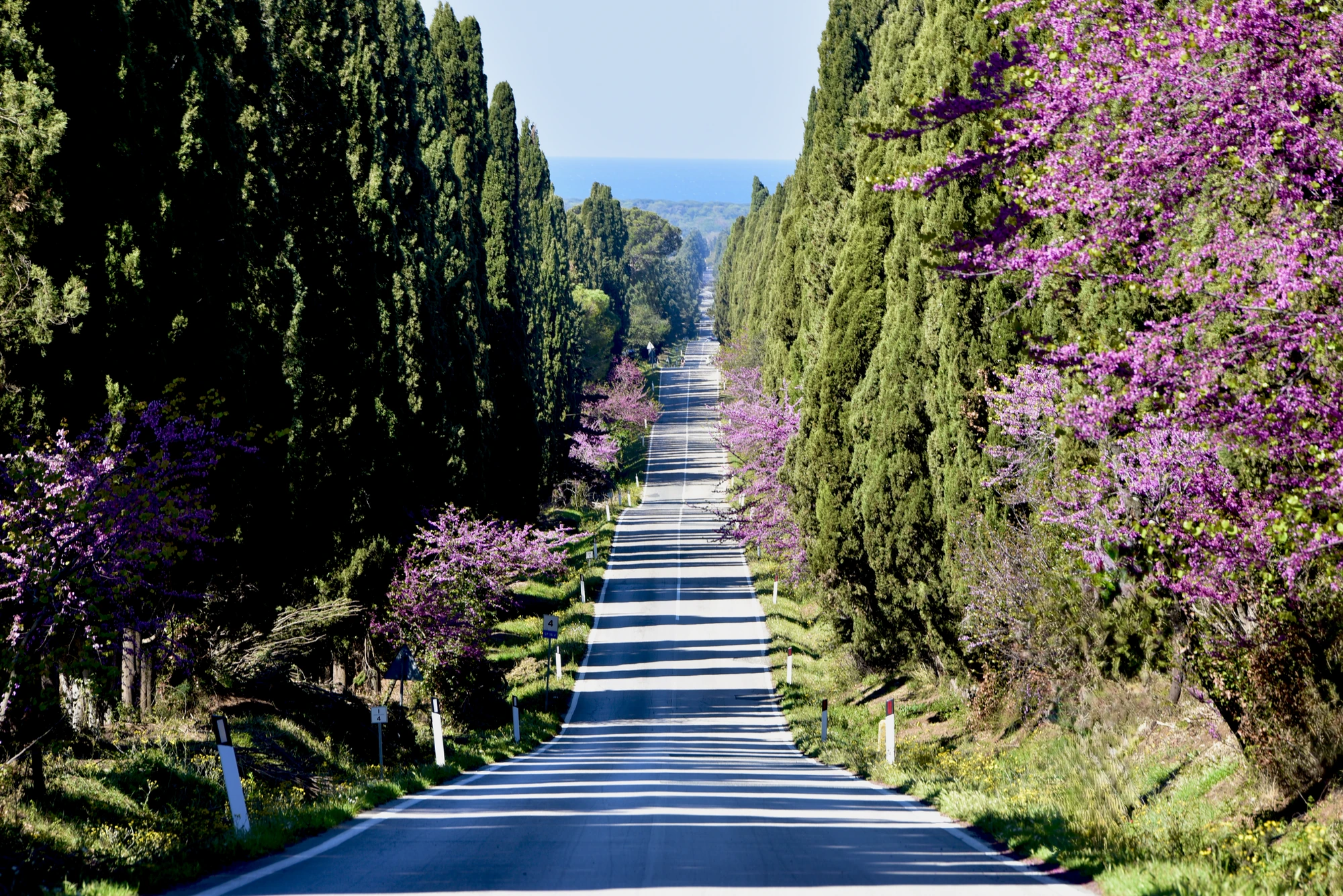
The cypress avenue that leads to Bolgheri — the Viale dei Cipressi — is the road in the photographs you have seen of Tuscany without knowing where they were taken. It is also the road Carducci wrote about in Davanti San Guido. Generations of Italian schoolchildren have memorized those lines.
I cycle the road in spring, when the Judas trees bloom pink against the deep green of the cypresses and the blue of the sky. I never get tired of it.
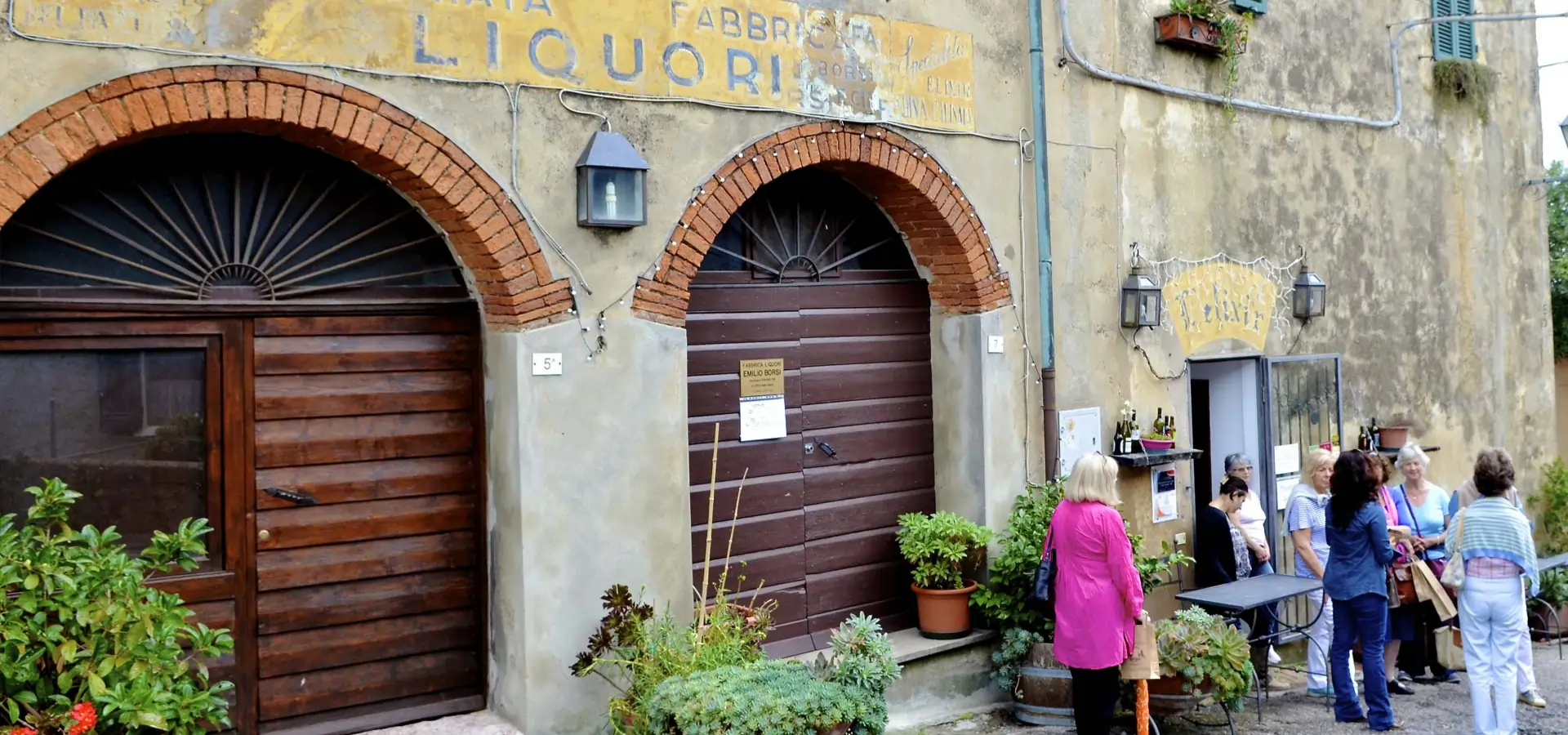
The village at the end of it is small — stone houses, brick archways, a single piazza, a few wine shops, a few restaurants. We walk it together in the soft hour before dinner.
Populonia — the Etruscan stronghold
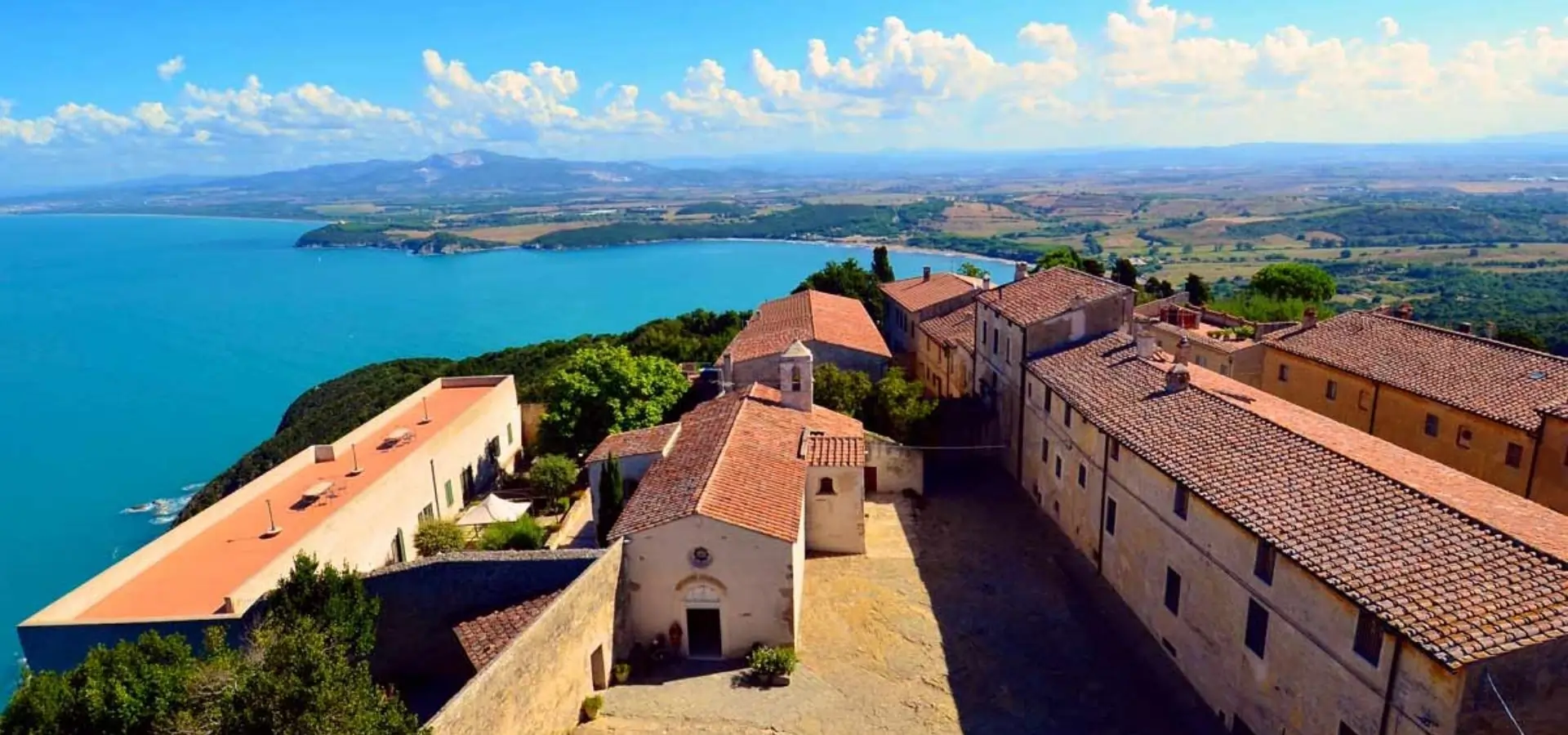
A fortified hilltop town above the bay of Baratti, where the Etruscans mined iron three thousand years ago. We climb the castle tower for the 360-degree view — on a clear day, you can see Corsica and Elba. Below the village, the Etruscan necropolis is still being excavated. We will walk it with you, briefly, on Day 2.
Volterra — three thousand years inside one set of walls
We drive an hour into the inland hills to reach Volterra on Day 4. Etruscan foundations. Roman theatre. Medieval centre. Alabaster artisans still working, in some workshops, exactly as they have for centuries. A local guide meets us at the gate.
Volterra is not a postcard town. It is a working city with three thousand years inside it, and walking it slowly is the only way to feel that.
I cipressi che a Bolgheri alti e schietti van da San Guido in duplice filar.
Layered time as a quality of place
Carducci wrote about the cypress road in the 19th century. The road was old when he wrote about it. The Etruscans were on this coast a thousand years before the Romans. Sassicaia is younger than my mother. The pecorino in the cheese cellar was made last week.
You feel that stacking when you drive from Volterra to Bolgheri in a single afternoon. You feel it again when you drink a Super Tuscan in a building older than the country it was made in. You go home and notice that time at home runs differently, somehow. It is not nostalgia. It is the simple fact of having walked somewhere where the past is still available to the touch.

“Treat yourself to a wonderful experience and tour with Chicca her charming Tuscan village, taste delicious pasta, gelato, and many other local specialties. It’s an unforgettable immersion in Tuscan culture, and we felt like locals!”

“We loved Castagneto Food tour. We sampled several traditional Tuscan recipes paired with great wines from the area. Lots of food! Our guide was great and told us stories about ancient history and local life as we toured in Castagneto. I learned a lot and had fun!”

“I would highly recommend Tuscan Wine & Food Tours! We did Bolgheri Food Tour, this village is stunning! We tasted delicious local food and amazing wines. We learn a lot about history, wine culture and traditional recipes from our fun and knowledgeable guide. Don’t miss it!”
Florence is a city, with the crowds and the museums. Chianti is the rolling-hills inland Tuscany of postcards. The Etruscan Coast is something else: coastal Tuscany, with the Mediterranean visible from the vineyards, the seafood and the steak on the same week, and a smaller, quieter, less tourist-saturated rhythm.
The seafood lunch on Day 2 is at a restaurant set right on the beach. The Mediterranean is six kilometers from the hotel — close enough for a morning walk if you want one. We do not build a beach day into the schedule, but the sea is part of every day.
Comfortable. Most days involve thirty to sixty minutes of total driving. Volterra on Day 4 is the longest single drive — about an hour each way. We provide all transfers; you never need to drive yourself.
Have other questions? See the full FAQ — or write to me directly. The real conversation is the call.
A presto, Chicca